Top 23 Clothing and Textile Recycling startups in USA
Apr 01, 2026
|
Like
29
1
Funding: $224M
Natural Fiber Welding develops a technology that can use plants and natural fibers to make textiles and other durable items.
Natural Fiber Welding develops a technology that can use plants and natural fibers to make textiles and other durable items.
2

Funding: $176.6M
Circ recycles discarded clothing to produce the basis of petroleum- and plant-based fabrics. The startup has figured out how to chemically separate blended fabrics into their original components without destroying either fiber. It recycles cotton, poly-cotton, polyester, nylon using water as a solvent. This makes the tech a clean and economical alternative in the recycling industry. Circ’s dissolving pulp and petroleum monomers can be sold at the same cost as virgin materials to manufacturers who make fibres. The company operates industrial-sized textile-to-textile recycling plants in US and France. Allbirds, Zara, and H&M are incorporating Circ-recycled textiles into their product lines, despite a small price premium.
Circ recycles discarded clothing to produce the basis of petroleum- and plant-based fabrics. The startup has figured out how to chemically separate blended fabrics into their original components without destroying either fiber. It recycles cotton, poly-cotton, polyester, nylon using water as a solvent. This makes the tech a clean and economical alternative in the recycling industry. Circ’s dissolving pulp and petroleum monomers can be sold at the same cost as virgin materials to manufacturers who make fibres. The company operates industrial-sized textile-to-textile recycling plants in US and France. Allbirds, Zara, and H&M are incorporating Circ-recycled textiles into their product lines, despite a small price premium.


5

Funding: $31M
SuperCircle develops a technology platform and reverse logistics system for leading apparel brands and retailers. The startup is outsourcing clothing exchange program that allows customers to send used clothing directly from their closets and receive immediate payment. The AI-powered sorting system processes over 50 data points at the individual garment level, creates a digital twin of each textile and determins the most promising reuse or recycling path. The platform also enables management to track excess brand inventory by sourcing clothing directly from warehouses and stores and comply with Extended Producer Responsibility regulations. SuperCircle collaborates with over 75 partners, including J.Crew, GUESS and Reformation.
SuperCircle develops a technology platform and reverse logistics system for leading apparel brands and retailers. The startup is outsourcing clothing exchange program that allows customers to send used clothing directly from their closets and receive immediate payment. The AI-powered sorting system processes over 50 data points at the individual garment level, creates a digital twin of each textile and determins the most promising reuse or recycling path. The platform also enables management to track excess brand inventory by sourcing clothing directly from warehouses and stores and comply with Extended Producer Responsibility regulations. SuperCircle collaborates with over 75 partners, including J.Crew, GUESS and Reformation.
6

Funding: $25.7M
Evrnu is a technology and business model that recycles cotton garment waste to create premium, renewable textiles.
Evrnu is a technology and business model that recycles cotton garment waste to create premium, renewable textiles.
7

Funding: $20M
Ushering in a new era of sustainable and circular plastics. It engineers supercharged organisms to break down plastic and textile waste
Ushering in a new era of sustainable and circular plastics. It engineers supercharged organisms to break down plastic and textile waste
8

Funding: $7.8M
Bloomlabs provides a method to catalyze waste value by regenerating it as adaptable and appealing bio-plastics and textile fibers.
Bloomlabs provides a method to catalyze waste value by regenerating it as adaptable and appealing bio-plastics and textile fibers.
9

Funding: $7.6M
For Days sells sells recyclable clothes and then swap them for new ones, while the old ones are recycled.
For Days sells sells recyclable clothes and then swap them for new ones, while the old ones are recycled.
10
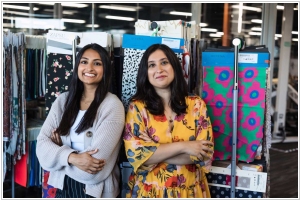
Funding: $4.7M
Refiberd develops an AI and robotics-based textile recycling system that sorts and recycles unsorted, discarded textiles into new ones.
Refiberd develops an AI and robotics-based textile recycling system that sorts and recycles unsorted, discarded textiles into new ones.
11

Funding: 3.2M
Hybridworks is providing sustainable textile solutions for blended fabrics destined for landfills.
Hybridworks is providing sustainable textile solutions for blended fabrics destined for landfills.
12
Funding: $2.3M
Ravel is a waste management company that offers purification recycling services for blended textiles.
Ravel is a waste management company that offers purification recycling services for blended textiles.
13

Funding: $1.6M
Fibarcode creates barcode labels for clothing woven right into fabric. They are read by a special device thank to using special photonic fibers. These labels are virtually impossible to counterfeit and cannot be cut. They can make clothing and other textiles more recyclable and help identify where, how and from what materials the product was made. After all, regular tags or tagless labels often don't last the life of the garment - they can simply wear off. And tags on counterfeit products may not contain accurate information about the fabric's composition. Photonic labels themselves can be effectively recycled along with the fabric. Moreover, for clothing manufacturers it is profitable to install such labels to help sellers prove the originality of the product.
Fibarcode creates barcode labels for clothing woven right into fabric. They are read by a special device thank to using special photonic fibers. These labels are virtually impossible to counterfeit and cannot be cut. They can make clothing and other textiles more recyclable and help identify where, how and from what materials the product was made. After all, regular tags or tagless labels often don't last the life of the garment - they can simply wear off. And tags on counterfeit products may not contain accurate information about the fabric's composition. Photonic labels themselves can be effectively recycled along with the fabric. Moreover, for clothing manufacturers it is profitable to install such labels to help sellers prove the originality of the product.
14
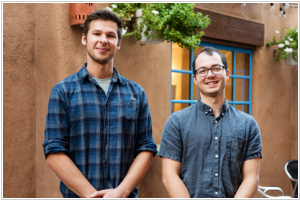
Funding: $1.2M
Tereform develops novel deconstruction processes to transform waste materials into pristine chemical building blocks.
Tereform develops novel deconstruction processes to transform waste materials into pristine chemical building blocks.

16

Trashie gives people an easy and convenient way to recycle unwanted clothing, shoes, accessories, linens, and more, keeping waste out of landfills for as long as possible and helping drive impact.
17
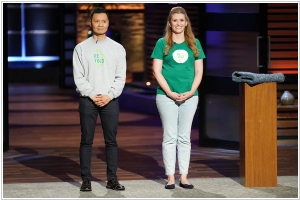
Funding: $300K
Retold Recycling aims to reduce the 12 million tons of textile waste that Americans create each year by tapping consumer and investor interest in the resale and sustainable-clothing spaces. Retold sells biodegradable bags that can be filled with up to five pounds of unused clothes or other textiles.
Retold Recycling aims to reduce the 12 million tons of textile waste that Americans create each year by tapping consumer and investor interest in the resale and sustainable-clothing spaces. Retold sells biodegradable bags that can be filled with up to five pounds of unused clothes or other textiles.
18
Funding: $300K
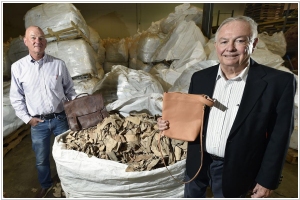
Sustainable Composites has developed a totally unique, technically advanced material made from leather waste which changes the environmental landscape for leather products. It is a new application of fiber technology, using only leather fiber derived from waste leather, to produce a responsible product with the attributes only previously available with traditional leather.
Sustainable Composites has developed a totally unique, technically advanced material made from leather waste which changes the environmental landscape for leather products. It is a new application of fiber technology, using only leather fiber derived from waste leather, to produce a responsible product with the attributes only previously available with traditional leather.
19
Funding: $255K
Maker of shipping-container sized textile waste recycling machines that convert end-of-life clothing and textiles into brand new market grade fiber.
Maker of shipping-container sized textile waste recycling machines that convert end-of-life clothing and textiles into brand new market grade fiber.
20
Funding: $156K
Centering on the term upcycling, which is a verb defined as “to reuse (discarded objects or material) in such a way as to create a product of a higher quality or value than the original,” Looptworks specializes in bags of all shapes and sizes, from clutches to backpacks.
Centering on the term upcycling, which is a verb defined as “to reuse (discarded objects or material) in such a way as to create a product of a higher quality or value than the original,” Looptworks specializes in bags of all shapes and sizes, from clutches to backpacks.
21

Funding: $25K
Fabscrap heads directly to the world-famous fashion industry to pick up and resell textile cast-offs — yards of cotton, strips of wool, pieces of luxurious silk, linen and leather.
Fabscrap heads directly to the world-famous fashion industry to pick up and resell textile cast-offs — yards of cotton, strips of wool, pieces of luxurious silk, linen and leather.
23

SwagCycle is a startup focused on responsibly managing the lifecycle of branded merchandise. When companies rebrand or get acquired, many often dispose of their obsolete branded merchandise. Leveraging our proprietary network of partners, we make this problem go away by helping companies repurpose and recycle unwanted branded items in a responsible, ethical, and affordable way.
★
See also: