Top 100 Recycling startups in USA
Mar 18, 2026
|
Like
17
1

Funding: $12M
Project Omega converts nuclear waste into betavoltaic batteries. The technology uses the same basic idea as solar photovoltaic cells, but with electrons from radiation instead of photons from the sun. The battery exploits a phenomenon known as betavoltaics, in which a semiconductor absorbs high-energy electrons, called β particles, that are ejected from decaying atomic nuclei. Energy from the β particles excites electrons in the semiconductor’s valence band into its conduction band, where a voltage can then carry the electrons off through a circuit to do useful work. The company has already created working prototype small battery running on strontium-90 decay that could power microprocessors in remote locations for years on end
Project Omega converts nuclear waste into betavoltaic batteries. The technology uses the same basic idea as solar photovoltaic cells, but with electrons from radiation instead of photons from the sun. The battery exploits a phenomenon known as betavoltaics, in which a semiconductor absorbs high-energy electrons, called β particles, that are ejected from decaying atomic nuclei. Energy from the β particles excites electrons in the semiconductor’s valence band into its conduction band, where a voltage can then carry the electrons off through a circuit to do useful work. The company has already created working prototype small battery running on strontium-90 decay that could power microprocessors in remote locations for years on end
2

Funding: $6.4M
Helix Earth has created products for earth from liquid-gas chemistry designed for spacecraft, including ultra-efficient HVAC and carbon capture systems. The company says its processes are far more energy-efficient while being more affordable and can be retrofitted to commercial rooftops.
Helix Earth has created products for earth from liquid-gas chemistry designed for spacecraft, including ultra-efficient HVAC and carbon capture systems. The company says its processes are far more energy-efficient while being more affordable and can be retrofitted to commercial rooftops.
3

Funding: $28.2M
Hauler Hero is a software and waste management company that delivering technology for waste and Recycling hauler operators.
Hauler Hero is a software and waste management company that delivering technology for waste and Recycling hauler operators.
4

BoxMow is a ride-sharing-style waste removal platform. Users upload a photo of the items they want picked up to the BoxMow website, which uses AI to analyze the order and generate a pickup quote (typically between $50 and $100; larger orders requiring two trucks can cost over $150). Drivers using the service can take the order if they can pick it up the next day. Items must be stored outside, as BoxMow will not enter your home. BoxMow will trash, recycle or donate the items to Goodwill.
5

Funding: $133M
Avnos is commercializing technology to capture CO2 without consuming water, producing water for every ton.
Avnos is commercializing technology to capture CO2 without consuming water, producing water for every ton.
6

Funding: $1.2B
KoBold Metals is a developer of machine prospector technology intended to facilitate a search for cobalt ore locations digitally.
KoBold Metals is a developer of machine prospector technology intended to facilitate a search for cobalt ore locations digitally.
7

Funding: $440.6M
Oklo is building an always on, container-sized, truly carbon-free and emission-free nuclear generator. Oklo's reactors can convert used nuclear fuel into clean energy.
Oklo is building an always on, container-sized, truly carbon-free and emission-free nuclear generator. Oklo's reactors can convert used nuclear fuel into clean energy.
8
Funding: $343.8M
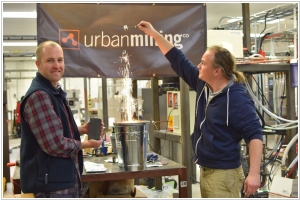
Urban Mining Company has developed groundbreaking technology to cost effectively recycle rare earth magnets from discarded hard disk drives or motors, and reprocess them into high performance magnets that are critical components used for industrial, automotive, clean energy, and military defense.
Urban Mining Company has developed groundbreaking technology to cost effectively recycle rare earth magnets from discarded hard disk drives or motors, and reprocess them into high performance magnets that are critical components used for industrial, automotive, clean energy, and military defense.
9

Funding: $131.6M
Biomason is a developer of a building materials technology that employs natural microorganisms to grow bio cement in ambient temperatures.
Biomason is a developer of a building materials technology that employs natural microorganisms to grow bio cement in ambient temperatures.
10

Funding: $130M
CuspAI is a cutting-edge AI startup that is creating next-generation materials to address global sustainability and renewable energy issues.
CuspAI is a cutting-edge AI startup that is creating next-generation materials to address global sustainability and renewable energy issues.

12

Funding: $47.9M
Membrion is a manufacturer of ultra-low cost, high performance ion exchange membranes.
Membrion is a manufacturer of ultra-low cost, high performance ion exchange membranes.
13
Funding: $46.1M
Genesis Systems provides methods for generating sustainable water resources and transforming the environment.
Genesis Systems provides methods for generating sustainable water resources and transforming the environment.
14

Funding: $44.2M
Molg enables circular manufacturing with robotics and design. Our robotic microfactories autonomously disassemble complex electronic products, and we work with manufacturers to design electronics for reuse — ensuring one product’s end is another’s new beginning.
Molg enables circular manufacturing with robotics and design. Our robotic microfactories autonomously disassemble complex electronic products, and we work with manufacturers to design electronics for reuse — ensuring one product’s end is another’s new beginning.
15

Funding: $27.1M
Rubi Laboratories develops technology that turns carbon emissions into carbon-negative textiles.
Rubi Laboratories develops technology that turns carbon emissions into carbon-negative textiles.
16

Funding: $13.7M
By engineering a new way to use CO2, and store energy, OCOchem’s technology helps solve the dual challenges of carbon emissions and large-scale zero-carbon energy storage for customers interested in reducing their carbon footprint, energy storage costs, or both.
By engineering a new way to use CO2, and store energy, OCOchem’s technology helps solve the dual challenges of carbon emissions and large-scale zero-carbon energy storage for customers interested in reducing their carbon footprint, energy storage costs, or both.
17

Funding: $10.2M
PolyGone Systems is a cleantech company that removes microplastic from waterways.
PolyGone Systems is a cleantech company that removes microplastic from waterways.
18
Funding: $9.4M
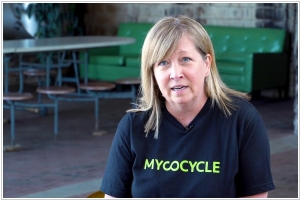
Mycocycle uses mushrooms to upcycle old tires and construction waste. Mycocycle’s patent-pending process improves the natural functions of fungi to transform construction waste into low-carbon raw materials for the built environment.
Mycocycle uses mushrooms to upcycle old tires and construction waste. Mycocycle’s patent-pending process improves the natural functions of fungi to transform construction waste into low-carbon raw materials for the built environment.
19

Funding: $7.8M
Bloomlabs provides a method to catalyze waste value by regenerating it as adaptable and appealing bio-plastics and textile fibers.
Bloomlabs provides a method to catalyze waste value by regenerating it as adaptable and appealing bio-plastics and textile fibers.
20
Funding: $6.1M
Carba is a clean-energy firm that is creating a reactor that transforms carbon dioxide into charcoal.
Carba is a clean-energy firm that is creating a reactor that transforms carbon dioxide into charcoal.
21
Funding: $4.7M
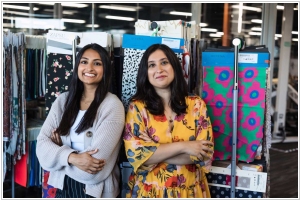
Refiberd develops an AI and robotics-based textile recycling system that sorts and recycles unsorted, discarded textiles into new ones.
Refiberd develops an AI and robotics-based textile recycling system that sorts and recycles unsorted, discarded textiles into new ones.

24
Funding: $2.3M
Azure Printed Homes developed World's First Robotically Printed Homes using recycled plastic bottles
Azure Printed Homes developed World's First Robotically Printed Homes using recycled plastic bottles
25

Funding: $1.6M
Fibarcode creates barcode labels for clothing woven right into fabric. They are read by a special device thank to using special photonic fibers. These labels are virtually impossible to counterfeit and cannot be cut. They can make clothing and other textiles more recyclable and help identify where, how and from what materials the product was made. After all, regular tags or tagless labels often don't last the life of the garment - they can simply wear off. And tags on counterfeit products may not contain accurate information about the fabric's composition. Photonic labels themselves can be effectively recycled along with the fabric. Moreover, for clothing manufacturers it is profitable to install such labels to help sellers prove the originality of the product.
Fibarcode creates barcode labels for clothing woven right into fabric. They are read by a special device thank to using special photonic fibers. These labels are virtually impossible to counterfeit and cannot be cut. They can make clothing and other textiles more recyclable and help identify where, how and from what materials the product was made. After all, regular tags or tagless labels often don't last the life of the garment - they can simply wear off. And tags on counterfeit products may not contain accurate information about the fabric's composition. Photonic labels themselves can be effectively recycled along with the fabric. Moreover, for clothing manufacturers it is profitable to install such labels to help sellers prove the originality of the product.
26

Funding: $4.9B
Redwood Materials is a leading battery and electronics recycling company. Founded by Tesla co-founder JB Straubel, the company's primary business is electric vehicle battery recycling. But in addition to car batteries, it recycles phones, laptops, tablets, power tools and any other lithium-ion-containing devices - to recover critical minerals such as lithium, nickel, cobalt, and copper. The company also uses old batteries to create own energy storage systems that supply electricity to data centers and the national power grid. The company also offers the creation of corporate and municipal energy storages. Thanks to using the most affordable domestic batteries, combining used and new batteries and simplifying installation and system design, it offers the most cost-effective energy storage systems on the market.
Redwood Materials is a leading battery and electronics recycling company. Founded by Tesla co-founder JB Straubel, the company's primary business is electric vehicle battery recycling. But in addition to car batteries, it recycles phones, laptops, tablets, power tools and any other lithium-ion-containing devices - to recover critical minerals such as lithium, nickel, cobalt, and copper. The company also uses old batteries to create own energy storage systems that supply electricity to data centers and the national power grid. The company also offers the creation of corporate and municipal energy storages. Thanks to using the most affordable domestic batteries, combining used and new batteries and simplifying installation and system design, it offers the most cost-effective energy storage systems on the market.
27

Funding: $1.8B
Ascend Elements is implementing sustainable, closed-loop recycling to the lithium-ion battery industry. Its Hydro-to-Cathode Direct Cathode Precursor Synthesis (pCAM) process converts mixed material from spent batteries and manufacturing scrap into active battery cathode material, increasing the value of critical elements like lithium, cobalt and nickel while reducing costs and carbon emissions. The company claims its sustainable battery materials can outperform traditional materials made from newly mined and refined metals, that they have a cycle life exceeding 50% and an 88% increase in capacity compared to traditional cells. In addition to shredding batteries and producing "black mass" or marketable metals, the company uses advanced particle engineering techniques. Ascend Elements also provides comprehensive logistics, materials tracking and customer support services.
Ascend Elements is implementing sustainable, closed-loop recycling to the lithium-ion battery industry. Its Hydro-to-Cathode Direct Cathode Precursor Synthesis (pCAM) process converts mixed material from spent batteries and manufacturing scrap into active battery cathode material, increasing the value of critical elements like lithium, cobalt and nickel while reducing costs and carbon emissions. The company claims its sustainable battery materials can outperform traditional materials made from newly mined and refined metals, that they have a cycle life exceeding 50% and an 88% increase in capacity compared to traditional cells. In addition to shredding batteries and producing "black mass" or marketable metals, the company uses advanced particle engineering techniques. Ascend Elements also provides comprehensive logistics, materials tracking and customer support services.
28
Funding: $1.4B
Eastman is a global specialty chemicals company that produces a range of advanced materials and chemicals.
Eastman is a global specialty chemicals company that produces a range of advanced materials and chemicals.
29

Funding: $929.4M
Twelve is a new kind of chemical company built for the climate era. We make essential products from air, not oil.
Twelve is a new kind of chemical company built for the climate era. We make essential products from air, not oil.
30

Funding: $855.8M
Solugen makes chemicals from custom enzymes and renewable feedstock. It uses dextrose, a simple sugar, and in the future it aims to convert carbon into useful products like building materials and formaldehyde-free resins.
Solugen makes chemicals from custom enzymes and renewable feedstock. It uses dextrose, a simple sugar, and in the future it aims to convert carbon into useful products like building materials and formaldehyde-free resins.
31

Funding: $844.2M
PureCycle transforms polypropylene plastic waste into like-new plastic. The revolutionary technology that PureCycle uses is a form of dissolution. It consists of six main process stages that help close the loop on plastic waste while making recycled plastics more accessible at scale to companies seeking to use a sustainable, recycled resin. PureCycle’s ultra-pure recycled resin with its clarity and low odor can be offered as a substitute for virgin polypropylene. PureCycle’s process uses less energy to recycle existing waste than the energy needed to create first-use plastic, making PureCycled plastic an environmentally mindful and sustainable product.
PureCycle transforms polypropylene plastic waste into like-new plastic. The revolutionary technology that PureCycle uses is a form of dissolution. It consists of six main process stages that help close the loop on plastic waste while making recycled plastics more accessible at scale to companies seeking to use a sustainable, recycled resin. PureCycle’s ultra-pure recycled resin with its clarity and low odor can be offered as a substitute for virgin polypropylene. PureCycle’s process uses less energy to recycle existing waste than the energy needed to create first-use plastic, making PureCycled plastic an environmentally mindful and sustainable product.
32
Funding: $719.1M
Apeel Sciences develops plant-derived shelf life extension technology which promises to keep food fresh for longer periods on store shelves and prevents waste
Apeel Sciences develops plant-derived shelf life extension technology which promises to keep food fresh for longer periods on store shelves and prevents waste
33
Funding: $690.2M
Vulcan Elements, a rare-earth magnets manufacturing startup backed by Donald Trump Jr. and having government contracts. The company says it has optimized the magnet manufacturing and recycling process and increased its efficiency, autonomy and cost competitiveness. It intends to build the Western rare earth supply chain and domestic production of magnets used in consumer electronics and weapons. Vulcan already runs small-scale commercial manufacturing and R&D facility and is building $1 billion ‘Polaris facility’ in North Carolina.
Vulcan Elements, a rare-earth magnets manufacturing startup backed by Donald Trump Jr. and having government contracts. The company says it has optimized the magnet manufacturing and recycling process and increased its efficiency, autonomy and cost competitiveness. It intends to build the Western rare earth supply chain and domestic production of magnets used in consumer electronics and weapons. Vulcan already runs small-scale commercial manufacturing and R&D facility and is building $1 billion ‘Polaris facility’ in North Carolina.
34

Funding: $680.6M
Workiva develops cloud-based AI platform for data-driven financial, risk and sustainability management. It integrates sustainability data from various sources to stay ahead of regulatory requirements and minimize risks. It also enables effective sustainability management by integrating financial and non-financial data into single core control environment. This enables compliance with the highest levels of regulatory oversight and external audit. The system enables corporations to align your sustainability strategies with mandatory and voluntary standards, identify critical risks and opportunities, and report on Scope 1, 2, and 3 emissions. It also enables to track changes in legislation, including the International Sustainability Standards Board and the Corporate Sustainability Reporting Directive.
Workiva develops cloud-based AI platform for data-driven financial, risk and sustainability management. It integrates sustainability data from various sources to stay ahead of regulatory requirements and minimize risks. It also enables effective sustainability management by integrating financial and non-financial data into single core control environment. This enables compliance with the highest levels of regulatory oversight and external audit. The system enables corporations to align your sustainability strategies with mandatory and voluntary standards, identify critical risks and opportunities, and report on Scope 1, 2, and 3 emissions. It also enables to track changes in legislation, including the International Sustainability Standards Board and the Corporate Sustainability Reporting Directive.
35

Funding: $650M
EnergyX is developing direct lithium extraction technology that enables recovery of lithium metal directly from brine in a form suitable for use as anodes for electric vehicle batteries. EnergyX has developed best-in-class sorbents (for extracting lithium molecules from water, capable of withstanding high temperatures, exhibiting fast kinetics and a long cycle life), SX reagents (for purifying and concentrating brines, capable of delivering Li content up to 60,000 ppm) and lithium-selective membranes (for preferential separation of Li molecules from impurities). The company has also patented electrolyte technology that safely leverages the full benefits of low-cost lithium-metal anode batteries compared to traditional lithium-ion batteries. EnergyX covers all aspects of the battery supply chain: from lithium extraction from brine, purification and manufacturing to the development of solid-state batteries with high safety and energy density.
EnergyX is developing direct lithium extraction technology that enables recovery of lithium metal directly from brine in a form suitable for use as anodes for electric vehicle batteries. EnergyX has developed best-in-class sorbents (for extracting lithium molecules from water, capable of withstanding high temperatures, exhibiting fast kinetics and a long cycle life), SX reagents (for purifying and concentrating brines, capable of delivering Li content up to 60,000 ppm) and lithium-selective membranes (for preferential separation of Li molecules from impurities). The company has also patented electrolyte technology that safely leverages the full benefits of low-cost lithium-metal anode batteries compared to traditional lithium-ion batteries. EnergyX covers all aspects of the battery supply chain: from lithium extraction from brine, purification and manufacturing to the development of solid-state batteries with high safety and energy density.
36

Funding: $621.5M
Grove creates and curates high-performing, planet-first home, and personal care products.
Grove creates and curates high-performing, planet-first home, and personal care products.
37
Funding: $501.7M
Rubicon provides affordable waste and recycling solutions for businesses seeking a smarter, sustainable alternative. Using technologies such as visual recognition and machine learning, the company conducts an initial screening of a client’s waste streams to identify types of waste and quantities, develops a waste separation system, and then tailors a waste collection schedule.
Rubicon provides affordable waste and recycling solutions for businesses seeking a smarter, sustainable alternative. Using technologies such as visual recognition and machine learning, the company conducts an initial screening of a client’s waste streams to identify types of waste and quantities, develops a waste separation system, and then tailors a waste collection schedule.
38
Funding: $442.4M
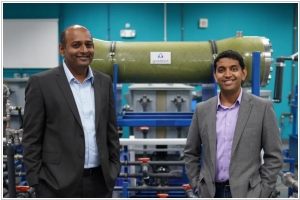
Gradiant is a solutions provider and developer of cleantech water projects for advanced water and wastewater treatment.
Gradiant is a solutions provider and developer of cleantech water projects for advanced water and wastewater treatment.
39

Funding: $430M
Vanguard Renewables is a national leader in the development of organics-to-renewable energy projects.
Vanguard Renewables is a national leader in the development of organics-to-renewable energy projects.
40

Funding: $380.9M
ProducePay is an AgTech company developing a financing platform that allows farmers to have access to liquidity for pricing transparency.
ProducePay is an AgTech company developing a financing platform that allows farmers to have access to liquidity for pricing transparency.
41

Funding: $377.4M
Cirba Solutions provides battery recycling services. It handles all types of chemistries and battery formats, and collaborates with partners to collect end-of-life batteries and scrap and maintains closed-loop US-domestic supply chain. The company has developed proprietary technology that ensures safe and efficient recovery of critical minerals from end-of-life alkaline batteries. It also utilizes cryogenic pre-treatment process for highly reactive lithium batteries. This process reduces their reactivity, allowing further physical separation. The batteries are then conveyed to an automated crusher operating in a liquid solution to prevent fugitive emissions and reduce the reactivity of the recycled batteries. The resulting materials include solid metal particles, which are fully recovered and used as feedstock for a variety of new products.
Cirba Solutions provides battery recycling services. It handles all types of chemistries and battery formats, and collaborates with partners to collect end-of-life batteries and scrap and maintains closed-loop US-domestic supply chain. The company has developed proprietary technology that ensures safe and efficient recovery of critical minerals from end-of-life alkaline batteries. It also utilizes cryogenic pre-treatment process for highly reactive lithium batteries. This process reduces their reactivity, allowing further physical separation. The batteries are then conveyed to an automated crusher operating in a liquid solution to prevent fugitive emissions and reduce the reactivity of the recycled batteries. The resulting materials include solid metal particles, which are fully recovered and used as feedstock for a variety of new products.
42

Funding: $368.6M
Lilac Solutions offers an ion exchange technology to address the challenges faced by lithium producers.
Lilac Solutions offers an ion exchange technology to address the challenges faced by lithium producers.
43

Funding: $340.3M
Genomatica manufactures sustainable chemicals from renewable feedstocks.
Genomatica manufactures sustainable chemicals from renewable feedstocks.
44

Funding: $302.5M
American Battery Technology Company implements a closed-loop battery recycling system that separates and recovers critical materials from end-of-life batteries, purifying these metals to the same or even higher quality than traditional primary mining materials. Instead of using brute-force methods, such as placing batteries in high-temperature furnaces and shredding systems, ABTC developed an automatic deconstruction process combined with a targeted, melt-free hydrometallurgical method that allows battery packs to be deconstructed into modules, modules into cells, cells into cell components and then sorts these cell components. This results in reduced waste, higher material recovery rates and quality. The company also operates sustainable lithium production facility in Tonopah Flats.
American Battery Technology Company implements a closed-loop battery recycling system that separates and recovers critical materials from end-of-life batteries, purifying these metals to the same or even higher quality than traditional primary mining materials. Instead of using brute-force methods, such as placing batteries in high-temperature furnaces and shredding systems, ABTC developed an automatic deconstruction process combined with a targeted, melt-free hydrometallurgical method that allows battery packs to be deconstructed into modules, modules into cells, cells into cell components and then sorts these cell components. This results in reduced waste, higher material recovery rates and quality. The company also operates sustainable lithium production facility in Tonopah Flats.
45

Funding: $281.2M
Fulcrum Bioenergy converts household garbage into low-carbon transportation fuels, including jet fuel, diesel, and ethanol.
Fulcrum Bioenergy converts household garbage into low-carbon transportation fuels, including jet fuel, diesel, and ethanol.
46

Funding: $280M
Advanced Disposal brings fresh ideas and solutions to the business of a clean environment.
Advanced Disposal brings fresh ideas and solutions to the business of a clean environment.
47
Funding: $266.1M
AMP Robotics creates robotic systems that sort recyclable material at a fraction of the cost of current technology.
AMP Robotics creates robotic systems that sort recyclable material at a fraction of the cost of current technology.
48

Funding: $260M
Aqua Metals is the only company that has produced a commercially proven sustainable, closed-loop metal recycling process that is capable of producing the world’s purest metals.
Aqua Metals is the only company that has produced a commercially proven sustainable, closed-loop metal recycling process that is capable of producing the world’s purest metals.
49
Funding: $250M
Aspiration offers retail banking and investing services that enable customers to spend and save their money in ways that protect the planet.
Aspiration offers retail banking and investing services that enable customers to spend and save their money in ways that protect the planet.
50

Funding: $244M
Brimstone Energy is producing mass-market, zero-carbon Portland cement, a key building material.
Brimstone Energy is producing mass-market, zero-carbon Portland cement, a key building material.