4 books on Metal Recycling [PDF]
Like
18
These books are covering the extraction and reuse of metals, advancements in recycling technology, environmental benefits of metal recycling, challenges in processing scrap metals, the economics of metal recovery, energy savings from recycling metals, etc.
1. Metal Recycling Innovations
2025 by Yves Earhart, AI
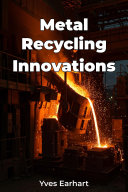
This book tells what ChatGPT thinks about modern metal recycling. For example, it reports that the main problem in this noble affair is separating metal from other waste. Still, the main technology for sorting metal is manual labor. One of the technologies for automated sorting is eddy current separation (ECS). The ECS system consists of a rapidly rotating magnetic rotor that creates a strong oscillating magnetic field. When non-ferrous metals such as aluminum, copper or brass pass over this magnetic field on a conveyor, eddy currents are induced in them. These currents create their own magnetic fields, opposite to the original one. As a result, the metal is repelled from the conveyor, actually “jumping” over the partition into a separate container. For example ECS is effective for separating aluminum cans from plastic bottles and other waste. Another technology, X-ray fluorescence (XRF), allows to identify and separate metals based on their elemental composition. When an X-ray hits an atom in a metallic material, it can knock an electron out of an inner shell. Thus, a hole is created and an electron from an outer orbit moves to fill it, releasing energy in the form of fluorescent X-rays. The energy of this radiation is unique to each element (like a signature). By detecting and measuring the energy of these X-rays an XRF analyzer can identify what elements are in the material and determine their concentrations. Today, portable XRF analyzers are widely used to search for metal parts in trash.
Download PDF
2. Electronic Waste: Recycling and Reprocessing for a Sustainable Future
2022 by Maria E. Holuszko, Amit Kumar, Denise C. R. Espinosa
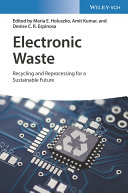
This book interestingly (in detail and with pictures) describes the process of recycling electronics in an way. In short, at first electronic products are disassembled - unfortunately, this is still manual labor. But it's necessary to separate the plastic cases and to reduce the size of the recycled parts for their more economical transportation to the electronics recycling plant (which is not available in every country). At the plant, everything starts with a shredder - electronic boards are simply destroyed into small particles. Then these particles are sorted by size using vibratory screens or a centrifuge - in order to direct them to the optimal equipment for a given size. Then there are several stages of separating metal particles from non-metallic ones: magnetic separation, electrical separation, high voltage fragmentation, gravity separation, eddy currents separation, knife mills, cryogrinding. The final process - Flotation - is already a chemical separation process that uses differences in the surface properties of various materials. It's based on the selective attachment of air bubbles to one specific material in the sample and lifting it to the surface where it is removed into a concentrate chute. Finally sensor-based sorting takes place - this is an automated material detection and removal system that uses a high-precision sorter to identify materials by their physical and chemical properties and removes them using an ejection system. Particle properties are processed using an algorithm developed in the laboratory based on the type of sensor and the properties of the ore. Particle removal is carried out by a stream of air jets. For some sensor technologies, mechanical ejectors are also used.
Download PDF
3. Principles of Metal Refining and Recycling
2021 by Thorvald Abel Engh, Geoffrey K. Sigworth, Anne Kvithyld
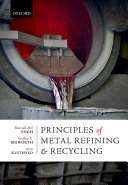
This book covers the basic principles of metal recycling. As you know, in general, waste metals are remelted to give them a new form. It seems simple, but recycled metal products are usually contaminated with various impurities. Impurities (oxygen, hydrogen, nitrogen and carbon) also enter the molten metal from the refractory walls of the reactors and the atmosphere during melting and refining. And because of these impurities, the mechanical properties of the resulting metal may be completely different from what we expect. Impurities are removed in the final stages of refining. For example, hydrogen and nitrogen are removed by gas purging and vacuum treatment. For less noble metals, such as iron, oxygen cannot be removed as a gas. Instead, an element with a high affinity for oxygen, such as aluminum, is introduced and binds the oxygen in the melt. Similarly, carbon dissolved in aluminum can react with the melt as it cools, forming solid inclusions of aluminum carbide. These inclusions must be removed before the metal can be cast. This process of removing dissolved elements and inclusions is discussed in this book in detail. It also describes the principles of operation of various reactors used for refining. Important processes for removing impurities in steel and aluminum production are discussed as examples.
Download PDF
4. Metal Sustainability: Global Challenges, Consequences, and Prospects
2016 by Reed M. Izatt
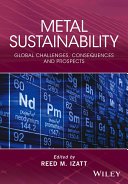
This book specifically examines the issue of recycling electronic products because, in the author’s opinion, this is the main source of waste metals on the planet. Given the high environmental impact of mining such technological metals (due to their low concentrations, difficult mining conditions, high energy and water consumption, use of aggressive chemicals, generation of significant waste volumes) recycling them from EoL products is extremely attractive. Moreover, additional environmental and economic benefits can be achieved if modern metal recycling technologies are used. However, the application of these advanced metallurgical smelting and refining technologies typically requires the collection and transportation of resource-containing components from EoL products, often over long distances. This is not a problem if only metal components/fractions (e.g., circuit boards, catalysts, batteries) are transported rather than entire devices. It's similar to the transportation of copper concentrates or anode slimes to specialized large-scale smelters around the world. So the ultimate goal is to have EoL products disassembled and pre-processed locally or regionally as appropriate. The resource-containing complex fractions should then be sent to modern integrated metallurgical plants for processing and refining. This last step in the processing chain requires a significant production scale; it therefore does not make sense to set up such plants in every country.
Download PDF
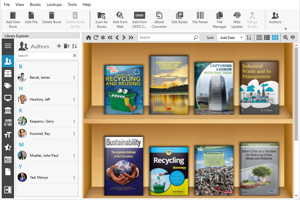
How to download PDF:
1. Install Gooreader
2. Enter Book ID to the search box and press Enter
3. Click "Download Book" icon and select PDF*
* - note that for yellow books only preview pages are downloaded
1. Metal Recycling Innovations
2025 by Yves Earhart, AI
This book tells what ChatGPT thinks about modern metal recycling. For example, it reports that the main problem in this noble affair is separating metal from other waste. Still, the main technology for sorting metal is manual labor. One of the technologies for automated sorting is eddy current separation (ECS). The ECS system consists of a rapidly rotating magnetic rotor that creates a strong oscillating magnetic field. When non-ferrous metals such as aluminum, copper or brass pass over this magnetic field on a conveyor, eddy currents are induced in them. These currents create their own magnetic fields, opposite to the original one. As a result, the metal is repelled from the conveyor, actually “jumping” over the partition into a separate container. For example ECS is effective for separating aluminum cans from plastic bottles and other waste. Another technology, X-ray fluorescence (XRF), allows to identify and separate metals based on their elemental composition. When an X-ray hits an atom in a metallic material, it can knock an electron out of an inner shell. Thus, a hole is created and an electron from an outer orbit moves to fill it, releasing energy in the form of fluorescent X-rays. The energy of this radiation is unique to each element (like a signature). By detecting and measuring the energy of these X-rays an XRF analyzer can identify what elements are in the material and determine their concentrations. Today, portable XRF analyzers are widely used to search for metal parts in trash.
Download PDF
2. Electronic Waste: Recycling and Reprocessing for a Sustainable Future
2022 by Maria E. Holuszko, Amit Kumar, Denise C. R. Espinosa
This book interestingly (in detail and with pictures) describes the process of recycling electronics in an way. In short, at first electronic products are disassembled - unfortunately, this is still manual labor. But it's necessary to separate the plastic cases and to reduce the size of the recycled parts for their more economical transportation to the electronics recycling plant (which is not available in every country). At the plant, everything starts with a shredder - electronic boards are simply destroyed into small particles. Then these particles are sorted by size using vibratory screens or a centrifuge - in order to direct them to the optimal equipment for a given size. Then there are several stages of separating metal particles from non-metallic ones: magnetic separation, electrical separation, high voltage fragmentation, gravity separation, eddy currents separation, knife mills, cryogrinding. The final process - Flotation - is already a chemical separation process that uses differences in the surface properties of various materials. It's based on the selective attachment of air bubbles to one specific material in the sample and lifting it to the surface where it is removed into a concentrate chute. Finally sensor-based sorting takes place - this is an automated material detection and removal system that uses a high-precision sorter to identify materials by their physical and chemical properties and removes them using an ejection system. Particle properties are processed using an algorithm developed in the laboratory based on the type of sensor and the properties of the ore. Particle removal is carried out by a stream of air jets. For some sensor technologies, mechanical ejectors are also used.
Download PDF
3. Principles of Metal Refining and Recycling
2021 by Thorvald Abel Engh, Geoffrey K. Sigworth, Anne Kvithyld
This book covers the basic principles of metal recycling. As you know, in general, waste metals are remelted to give them a new form. It seems simple, but recycled metal products are usually contaminated with various impurities. Impurities (oxygen, hydrogen, nitrogen and carbon) also enter the molten metal from the refractory walls of the reactors and the atmosphere during melting and refining. And because of these impurities, the mechanical properties of the resulting metal may be completely different from what we expect. Impurities are removed in the final stages of refining. For example, hydrogen and nitrogen are removed by gas purging and vacuum treatment. For less noble metals, such as iron, oxygen cannot be removed as a gas. Instead, an element with a high affinity for oxygen, such as aluminum, is introduced and binds the oxygen in the melt. Similarly, carbon dissolved in aluminum can react with the melt as it cools, forming solid inclusions of aluminum carbide. These inclusions must be removed before the metal can be cast. This process of removing dissolved elements and inclusions is discussed in this book in detail. It also describes the principles of operation of various reactors used for refining. Important processes for removing impurities in steel and aluminum production are discussed as examples.
Download PDF
4. Metal Sustainability: Global Challenges, Consequences, and Prospects
2016 by Reed M. Izatt
This book specifically examines the issue of recycling electronic products because, in the author’s opinion, this is the main source of waste metals on the planet. Given the high environmental impact of mining such technological metals (due to their low concentrations, difficult mining conditions, high energy and water consumption, use of aggressive chemicals, generation of significant waste volumes) recycling them from EoL products is extremely attractive. Moreover, additional environmental and economic benefits can be achieved if modern metal recycling technologies are used. However, the application of these advanced metallurgical smelting and refining technologies typically requires the collection and transportation of resource-containing components from EoL products, often over long distances. This is not a problem if only metal components/fractions (e.g., circuit boards, catalysts, batteries) are transported rather than entire devices. It's similar to the transportation of copper concentrates or anode slimes to specialized large-scale smelters around the world. So the ultimate goal is to have EoL products disassembled and pre-processed locally or regionally as appropriate. The resource-containing complex fractions should then be sent to modern integrated metallurgical plants for processing and refining. This last step in the processing chain requires a significant production scale; it therefore does not make sense to set up such plants in every country.
Download PDF
How to download PDF:
1. Install Gooreader
2. Enter Book ID to the search box and press Enter
3. Click "Download Book" icon and select PDF*
* - note that for yellow books only preview pages are downloaded