3 books on Electronics Recycling [PDF]
Like
35
These books are covering the recycling process for electronics, environmental impacts of e-waste, challenges in recovering valuable materials, innovations in electronic reuse, regulations on e-waste disposal, etc.
1. Integrated Approaches for Sustainable E-Waste Management
2025 by
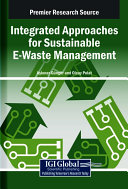
This book is mostly meaningless AI repetitions of the same abstract thoughts, but it has an interesting topic - designing electronics for sustainable development (DfS). There are two DfS strategies: the first is to create electronic devices with a long life cycle, with a modular design (with the ability to repair it continuously and with minimal costs). But for obvious reasons, this approach does not suit electronics manufacturers, because their sales are falling. For example, Google once launched an experimental Project Ara, which aimed to create a fully modular smartphone where you can change almost all the components. But even Google, which does not count money, did not take off such a project - it was closed. The second strategy is to create less reliable, but easily recyclable devices. This strategy also involves modular design and the use of certain materials. For example, companies are starting to use recycled aluminum (Apple in MacBooks and iPhones), recycled plastic in keyboards and mice (Logitech). Apple even has a robot called Daisy that disassembles old iPhones into components for recycling. Another company - Fairphone offers the opportunity to refurbish your old phone. They disassemble it and recycle the worn parts, then reassemble it and return it to the owner.
Download PDF
2. Electronic Waste: Recycling and Reprocessing for a Sustainable Future
2022 by Maria E. Holuszko, Amit Kumar, Denise C. R. Espinosa
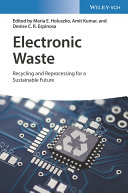
This book interestingly (in detail and with pictures) describes the process of recycling electronics in an way. In short, at first electronic products are disassembled - unfortunately, this is still manual labor. But it's necessary to separate the plastic cases and to reduce the size of the recycled parts for their more economical transportation to the electronics recycling plant (which is not available in every country). At the plant, everything starts with a shredder - electronic boards are simply destroyed into small particles. Then these particles are sorted by size using vibratory screens or a centrifuge - in order to direct them to the optimal equipment for a given size. Then there are several stages of separating metal particles from non-metallic ones: magnetic separation, electrical separation, high voltage fragmentation, gravity separation, eddy currents separation, knife mills, cryogrinding. The final process - Flotation - is already a chemical separation process that uses differences in the surface properties of various materials. It's based on the selective attachment of air bubbles to one specific material in the sample and lifting it to the surface where it is removed into a concentrate chute. Finally sensor-based sorting takes place - this is an automated material detection and removal system that uses a high-precision sorter to identify materials by their physical and chemical properties and removes them using an ejection system. Particle properties are processed using an algorithm developed in the laboratory based on the type of sensor and the properties of the ore. Particle removal is carried out by a stream of air jets. For some sensor technologies, mechanical ejectors are also used.
Download PDF
3. The Complete Technology Book on E-Waste Recycling
2015 by NIIR Board of Consultants & Engineers
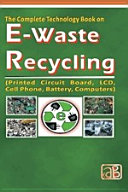
This book gives a detailed description of what e-waste is and how it is recycled in India. You will learn that the composition of e-waste is very diverse and differs across different product categories. It includes over 1000 different substances, which are divided into hazardous and non-hazardous. In general, it consists of ferrous and non-ferrous metals, plastics, glass, plywood, printed circuit boards, concrete and ceramics, rubber and other items. The most valuable - non-ferrous metals include metals like copper, aluminum and precious metals like silver. The author also devides E-waste into three main categories: Large Home Appliances (like refrigerator and washing machine), IT, Telecom Equipment (like personal computer, monitor and laptop), Consumer Appliances (like TV). Each of these types of waste contains up to twenty-six common components that can be found in it. These components are the building blocks of each item and are easy to identify and dispose of. For example washing machine contains metal, motor/compressor, cooling elements, plastic, insulation, glass, LCD, rubber, wiring/electrical, concrete, transformer, magnetron, textile, printed circuit board, fluorescent lamp, incandescent lamp, heating element, thermostat, plastic containing brominated flame retardants (BFRs), batteries, external electrical cables, fire-resistant ceramic fibers, radioactive substances and electrolytic capacitors. Thus, e-waste from these items can be disassembled into a relatively small number of common components for further recycling.
Download PDF
How to download PDF:
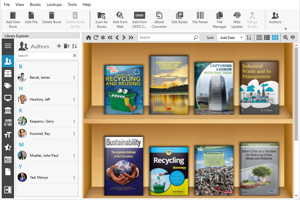
1. Install Gooreader
2. Enter Book ID to the search box and press Enter
3. Click "Download Book" icon and select PDF*
* - note that for yellow books only preview pages are downloaded
1. Integrated Approaches for Sustainable E-Waste Management
2025 by
This book is mostly meaningless AI repetitions of the same abstract thoughts, but it has an interesting topic - designing electronics for sustainable development (DfS). There are two DfS strategies: the first is to create electronic devices with a long life cycle, with a modular design (with the ability to repair it continuously and with minimal costs). But for obvious reasons, this approach does not suit electronics manufacturers, because their sales are falling. For example, Google once launched an experimental Project Ara, which aimed to create a fully modular smartphone where you can change almost all the components. But even Google, which does not count money, did not take off such a project - it was closed. The second strategy is to create less reliable, but easily recyclable devices. This strategy also involves modular design and the use of certain materials. For example, companies are starting to use recycled aluminum (Apple in MacBooks and iPhones), recycled plastic in keyboards and mice (Logitech). Apple even has a robot called Daisy that disassembles old iPhones into components for recycling. Another company - Fairphone offers the opportunity to refurbish your old phone. They disassemble it and recycle the worn parts, then reassemble it and return it to the owner.
Download PDF
2. Electronic Waste: Recycling and Reprocessing for a Sustainable Future
2022 by Maria E. Holuszko, Amit Kumar, Denise C. R. Espinosa
This book interestingly (in detail and with pictures) describes the process of recycling electronics in an way. In short, at first electronic products are disassembled - unfortunately, this is still manual labor. But it's necessary to separate the plastic cases and to reduce the size of the recycled parts for their more economical transportation to the electronics recycling plant (which is not available in every country). At the plant, everything starts with a shredder - electronic boards are simply destroyed into small particles. Then these particles are sorted by size using vibratory screens or a centrifuge - in order to direct them to the optimal equipment for a given size. Then there are several stages of separating metal particles from non-metallic ones: magnetic separation, electrical separation, high voltage fragmentation, gravity separation, eddy currents separation, knife mills, cryogrinding. The final process - Flotation - is already a chemical separation process that uses differences in the surface properties of various materials. It's based on the selective attachment of air bubbles to one specific material in the sample and lifting it to the surface where it is removed into a concentrate chute. Finally sensor-based sorting takes place - this is an automated material detection and removal system that uses a high-precision sorter to identify materials by their physical and chemical properties and removes them using an ejection system. Particle properties are processed using an algorithm developed in the laboratory based on the type of sensor and the properties of the ore. Particle removal is carried out by a stream of air jets. For some sensor technologies, mechanical ejectors are also used.
Download PDF
3. The Complete Technology Book on E-Waste Recycling
2015 by NIIR Board of Consultants & Engineers
This book gives a detailed description of what e-waste is and how it is recycled in India. You will learn that the composition of e-waste is very diverse and differs across different product categories. It includes over 1000 different substances, which are divided into hazardous and non-hazardous. In general, it consists of ferrous and non-ferrous metals, plastics, glass, plywood, printed circuit boards, concrete and ceramics, rubber and other items. The most valuable - non-ferrous metals include metals like copper, aluminum and precious metals like silver. The author also devides E-waste into three main categories: Large Home Appliances (like refrigerator and washing machine), IT, Telecom Equipment (like personal computer, monitor and laptop), Consumer Appliances (like TV). Each of these types of waste contains up to twenty-six common components that can be found in it. These components are the building blocks of each item and are easy to identify and dispose of. For example washing machine contains metal, motor/compressor, cooling elements, plastic, insulation, glass, LCD, rubber, wiring/electrical, concrete, transformer, magnetron, textile, printed circuit board, fluorescent lamp, incandescent lamp, heating element, thermostat, plastic containing brominated flame retardants (BFRs), batteries, external electrical cables, fire-resistant ceramic fibers, radioactive substances and electrolytic capacitors. Thus, e-waste from these items can be disassembled into a relatively small number of common components for further recycling.
Download PDF
How to download PDF:
1. Install Gooreader
2. Enter Book ID to the search box and press Enter
3. Click "Download Book" icon and select PDF*
* - note that for yellow books only preview pages are downloaded